Home / Article
Your CMMC Certificate Inventory Just Became Real
A certificate authority failed this week. Not a server. Not an app. The authority that signs the proof of identity.
What happened
On October 17, 2026, a researcher reported that eight eMudhra intermediate certificates had compromised private keys. The keys were generated with almost no randomness, so anyone could recover them from public data. Six of the certificates sign TLS traffic. TLS is transport layer security. Two sign code.
Mozilla announced the compromise on the oss-security mailing list. The certificates were trusted by the Mozilla, Microsoft, Apple, and Chrome root programs. All four blocked them between October 17 and 20. eMudhra revoked them on October 18.
No end entity certificates appear in Certificate Transparency logs under these intermediates. That limited the damage. It did not remove the risk for clients that skip transparency checks.
The CMMC practice that covers this
CMMC practice SC.L2-3.13.11 comes from NIST SP 800-171. It asks you to use FIPS-validated cryptography when you protect information. FIPS is the Federal Information Processing Standards. Weak keys fail this practice twice. They are not strong cryptography, and they were not generated by a sound process.
Practice SC.L2-3.13.1 asks for boundary protection. Your trust store is part of the boundary. If a CA in your trust store is compromised, your boundary trusts a forger.
An assessor will not ask about eMudhra by name. They will ask how you know your cryptography is sound. The inventory is the answer.
The four records that prove it
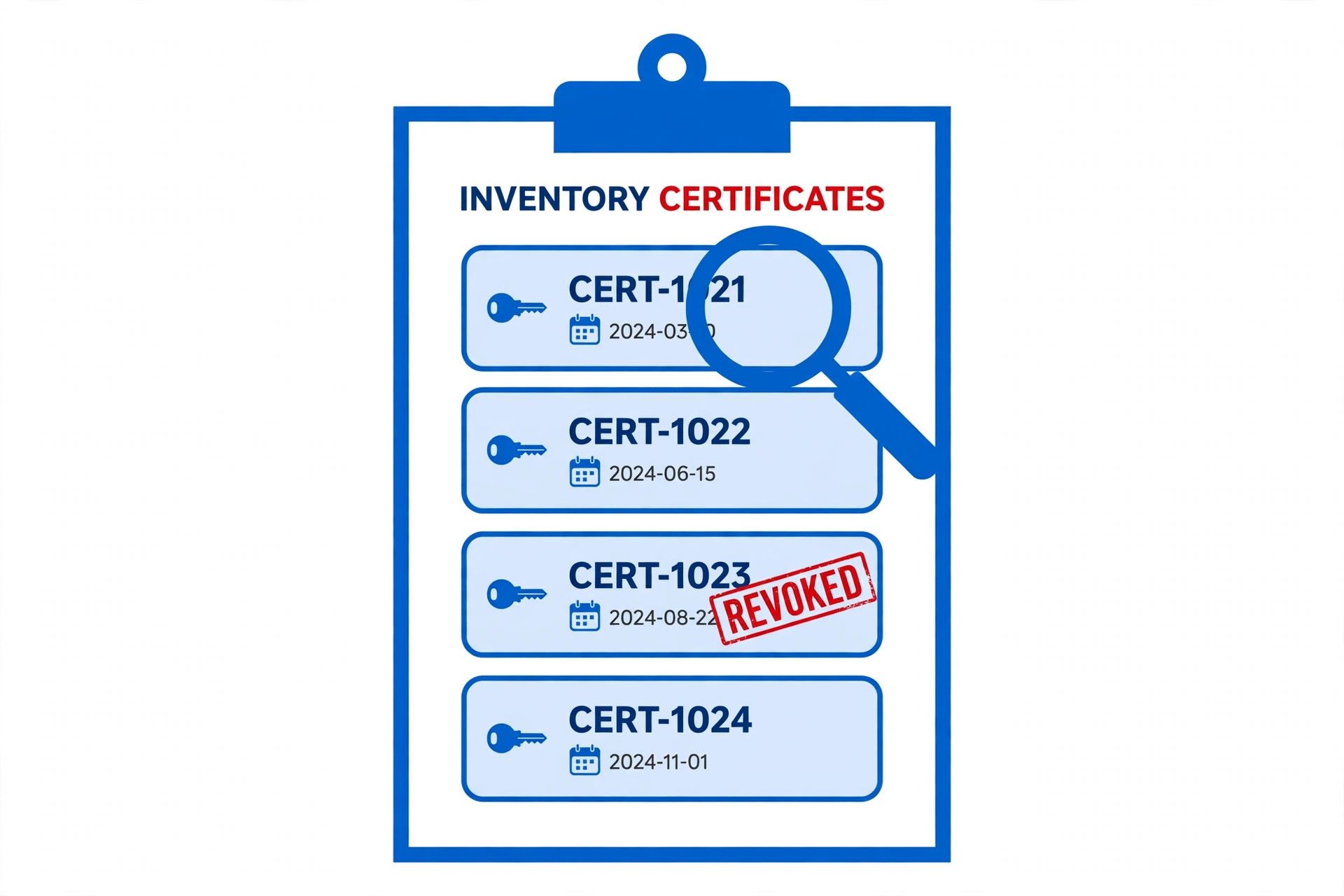
First, the certificate inventory. It lists the certificates and trust anchors on every system in scope. Name the issuer, the expiry, and where each one is installed. Date the inventory.
Second, the review record. It shows who checked the inventory and when. One review per year is the floor. Quarterly is better.
Third, the incident runbook for CA compromise. It names who pushes trust store updates, how the update reaches every system, and how you confirm it landed. Embedded devices and containers need their own path. They do not update themselves.
Fourth, the action record for this event. It shows you checked your systems against the eMudhra intermediates. It shows what you found and what you remediated. It shows the vendor blocks landed. Date everything.
What to do this week
Build the inventory if it does not exist. Start with public facing systems. Add internal systems next. Include the CA chain, not just the leaf certificate.
Then walk the runbook. Pick one system and push a trust store update by hand. Time it. If it takes a week for one system, your runbook needs work before the next CA fails.
Sources
- eMudhra Intermediates Compromise, Dennis Jackson, Mozilla, oss-security mailing list, October 20, 2026. https://www.openwall.com/lists/oss-security/2026/10/20/1
- India's cybersecurity agency warns of compromise of eMudhra intermediate CA certificates, CERT-In advisory reported October 21, 2026.
- Original diagram by PolicyCortex.
Next step
Want control evidence that pulls itself from your live systems? See how PolicyCortex collects it on Azure.