Home / Article
FortiSIEM RCE and the Integrity of Your CMMC Evidence
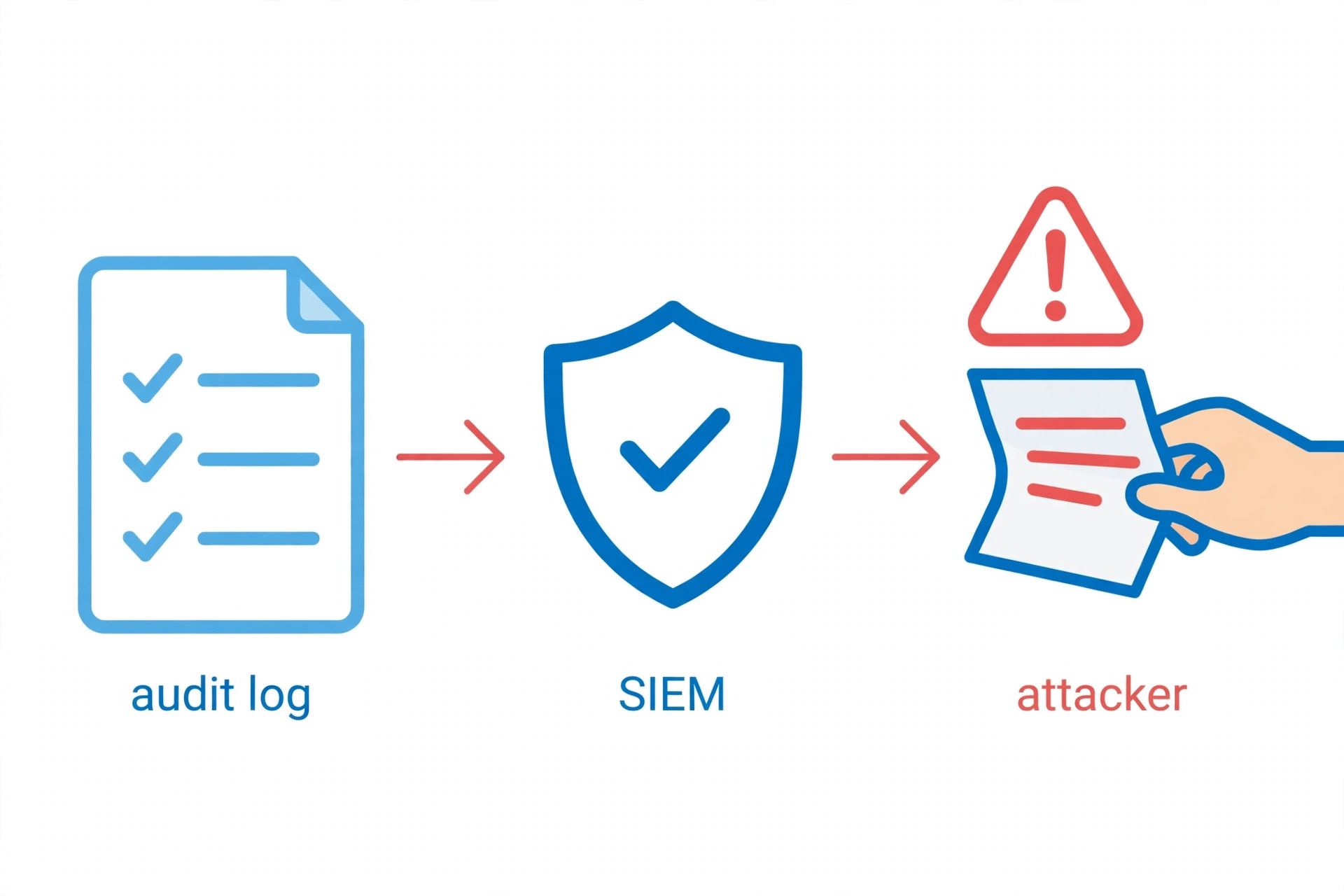
Your SIEM watches the network. This week the network watched it back.
What happened
On October 20, 2026, Horizon3.ai published a working exploit for CVE-2026-106173. The flaw sits in the FortiSIEM phQueryMaster gRPC service. A SIEM is a security information and event management system. The service listens on TCP port 27918 and skips client certificates.
An attacker with no login can reach it. A path traversal bug plus a null byte in the request lets the attacker write files anywhere on the appliance. File write becomes code execution.
Fortinet rates it 9.4. Several vulnerability databases list 9.8. Fortinet's advisory FG-IR-26-180 shipped October 13, 2026. FortiSIEM 7.5.0 is affected. The fix is 7.5.1 or later. FortiSIEM Cloud is not affected.
Why assessors care about the SIEM itself
CMMC practice SI.L2-3.14.1 comes from NIST SP 800-171. It asks you to identify, report, and correct flaws in a timely manner. Your SIEM is one of the systems the practice covers.
But the SIEM has a second role. Many teams use it to collect the very logs that prove controls work. An attacker with code execution on the SIEM can disable rules. They can alter stored logs. They can read the credentials the SIEM holds for monitored systems.
An assessor will ask one question your patch list cannot answer. Can the tool that collected your evidence be trusted? If the SIEM ran 7.5.0 during the assessment window, that question has teeth.
The four records that answer it
First, the version record. It shows your FortiSIEM build before and after the upgrade to 7.5.1. Name both builds and the date.
Second, the exposure record. It shows whether TCP port 27918 was reachable from outside the management network, and when you restricted it.
Third, the compromise check. Horizon3.ai found no clear log line for this attack. Check file timestamps by hand. Check scheduled scripts for unexpected changes. Date and sign the result.
Fourth, the rule review. Confirm your detection rules are intact and enabled. An attacker who owned the SIEM could have quietly turned them off.
What to do this week
Inventory every security tool in your boundary, not just the assets they watch. SIEM, log collectors, and vulnerability scanners all run software. All of it can have flaws.
Apply the same flaw record discipline to the tools that CMMC depends on. The evidence chain starts at the collector. A broken collector breaks the chain.
Sources
- FG-IR-26-180: FortiSIEM path traversal vulnerability, Fortinet Product Security, October 13, 2026. https://www.fortiguard.com/psirt/FG-IR-26-180
- CVE-2026-106173 record, CVE Program. https://www.cve.org/CVERecord?id=CVE-2026-106173
- FortiSIEM CVE-2026-106173 technical analysis and proof of concept, Horizon3.ai, October 20, 2026.
- Original diagram by PolicyCortex.
Next step
Want flaw remediation evidence that pulls itself from your live systems? See how PolicyCortex collects it on Azure.